

Brad Pitt face shape is commonly described as square, but published styling guides don't fully agree. It can read as rectangular or oval depending on the photo. Byrdie lists him as square. GQ barber Matty Conrad calls the outline rectangular and square. Cultured Grooming calls it oval with a strong jaw. The fairest summary is square, with a rectangular reading in longer-looking photos.
These are styling labels, not scientific categories. They describe the outline a photo seems to show. If you want to use the reference, copy the framing principle rather than forcing the same label.
What the sources actually call it
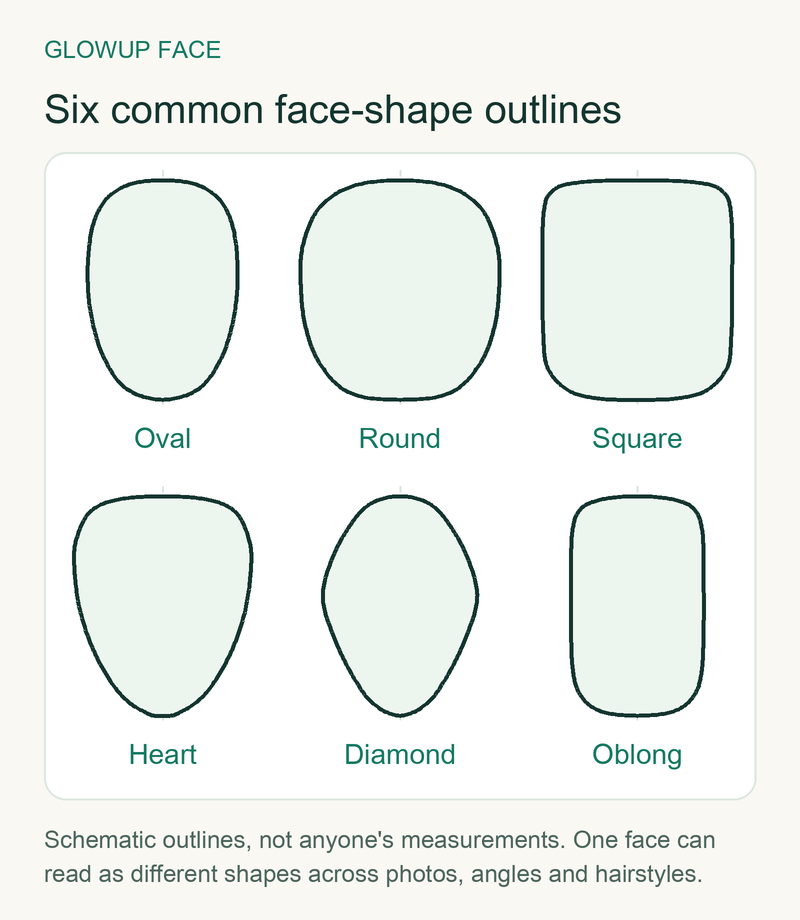
Bryan Levandowski's Byrdie guide places Pitt in its square group. That group uses an angular lower outline and a broad-looking jaw as its main cues. The guide also notes that many faces sit between categories.
In GQ's hairstyle review, barber Matty Conrad describes Pitt's face as rectangular and square. That wording fits a hybrid reading: strong jaw corners with more visible length in some photos.
Jack Brennan's Cultured Grooming guide takes a different view. It calls the face oval with a strong jaw. This is the clearest disagreement among the sources checked for this article.
The sources provide editorial labels rather than a standardized classification. Their labels are judgments from public photos.
What the visible outline can look like
Across public photos, the forehead and cheekbones often appear fairly close in visual breadth. The jaw usually reads broad, with defined corners and a chin that looks flatter than pointed. Those cues explain the square label.
Some straight-on photos make the face look longer, while the sides stay fairly direct from temples to jaw. That combination can read as rectangular. Softer hair around the temples or jaw can make the same outline look more curved and oval.
This isn't a verdict on the underlying structure. Hair, facial hair, pose, expression, and camera setup all change the visible boundary.
Why the label changes between photos
- Camera distance and lens. In a 2017 Cognition study, Noyes and Jenkins found that camera distance changed depicted face configuration. The effect remained when the photos appeared at the same size. Lens choice often changes how close the photographer stands. A close, wide view can enlarge central features and push the sides back.
- Head angle. Turning the head hides part of one side and shortens the visible outline. Tilting up or down changes how the jaw and chin project.
- Expression. A smile lifts and spreads the cheeks, while a tight mouth can sharpen the lower outline. In a 2016 PeerJ study, Robin Kramer found that expression changed a two-dimensional facial measure within the same person.
- Hair over the forehead or jaw. A fringe can hide the upper boundary. Longer sides can soften the temples or jaw corners, while swept-back hair reveals them.
- Beard. Dense growth adds a new outer edge. A narrow chin section can lengthen the look, while fuller sides can make the lower face read broader.
- The year of the photo. Different years usually bring different cuts, facial-hair choices, cameras, and editorial treatments. Compare photos from the same period before deciding that the outline itself changed.
This is why one photo can't settle the label. Our guide to selfie distortion and face shape explains the camera effect in more detail. The broader guide to what face-shape labels mean explains why category borders overlap.
What you can borrow for your own outline
Start with the feature you share, not the celebrity name. A broad jaw, a longer outline, or curved sides each calls for a different framing choice.
Haircut
If your jaw and forehead look similarly broad, try diagonal movement or soft texture instead of a boxy top. A side-swept fringe, loose quiff, or textured crop can break up straight edges. If you prefer to show the outline, a close crop does that clearly. Browse the men's square-face hairstyle hub for options by cut.
Brows
Keep the natural brow line as your starting point. A gentle curve can offset an angular lower outline. A straighter brow repeats it. Avoid forcing a sharp block at the inner brow unless that contrast is deliberate.
Glasses
Round or softly curved acetate frames contrast with firm jaw corners. Soft rectangles echo the outline without doubling every edge. Fit at the bridge and temples matters more than a face-shape rule. The frame guide by face shape shows how to compare both factors.
Beard
Shorter sides keep a broad jaw visible. More length at the chin makes the lower outline read longer. Fuller growth at the sides adds width. Pick one effect rather than copying another person's beard. Our beard framing guide maps those choices to common outlines.
A practical styling map
The table maps a visible outline cue to a likely photo effect, then offers one styling direction. It is illustrative, not a validated assessment. It contains no person-specific data or claimed product outcomes.
| Outline feature | Why it may read differently between photos | Styling option for you |
|---|---|---|
| Broad jaw with clear corners | A head turn or hair at the jaw can hide one corner, making the outline seem narrower. | Try diagonal haircut texture and rounded or softly curved frames. |
| Forehead and jaw look similar in breadth | A fringe or swept-back hair changes how much of the upper outline stays visible. | Use a light fringe for partial coverage, or sweep hair back to show the full outline. |
| Face looks longer than broad | Camera pitch and extra height on top can make the length read stronger. | Keep top height moderate, add movement at the sides, and keep beard sides neat. |
| Jaw corners look softly rounded | A smile, soft light, or longer side hair can blur the corners. | Try a straighter brow or soft-rectangle frame if you want a firmer visual line. |
The table cannot tell you which option you should choose. Hair texture, density, frame fit, beard growth, and the look you prefer still control the decision.
Check your own outline before choosing a label
Use a front-facing photo with a neutral expression, level head, and hair clear of the outer face. Stand farther from the camera and crop afterward. Compare more than one photo taken under similar conditions.
You can check your visible outline with the on-device face-shape finder. It gives an approximate styling category, not a reading of underlying anatomy. Use the result to narrow haircut options, then let hair texture and maintenance decide.

Oscar Nascimento
Editorial writer, GlowUp Face
Oscar writes about evidence-based skin care, healthcare, looksmaxxing, and the social and economic research surrounding appearance.
Full profile and all articles →


