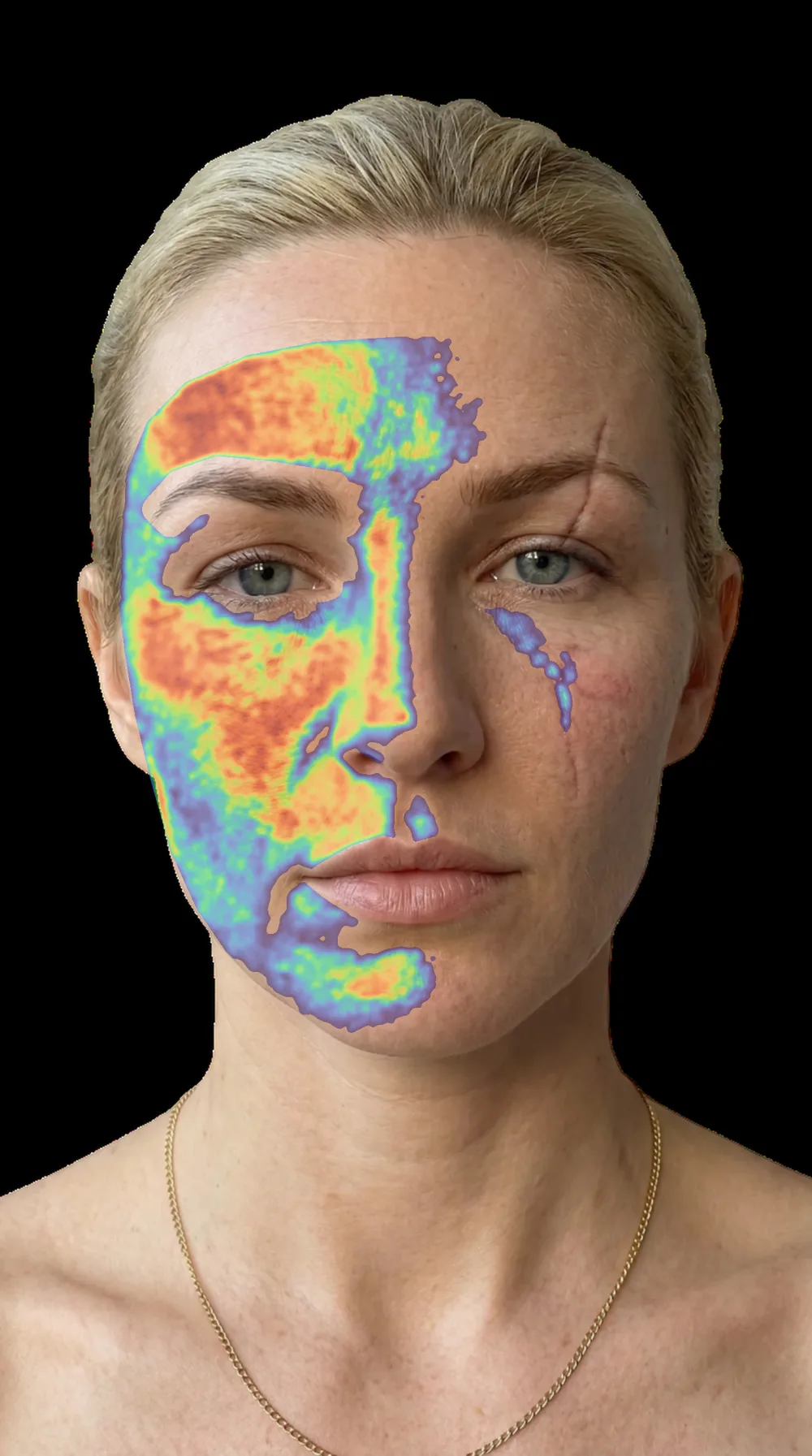
Pore texture map
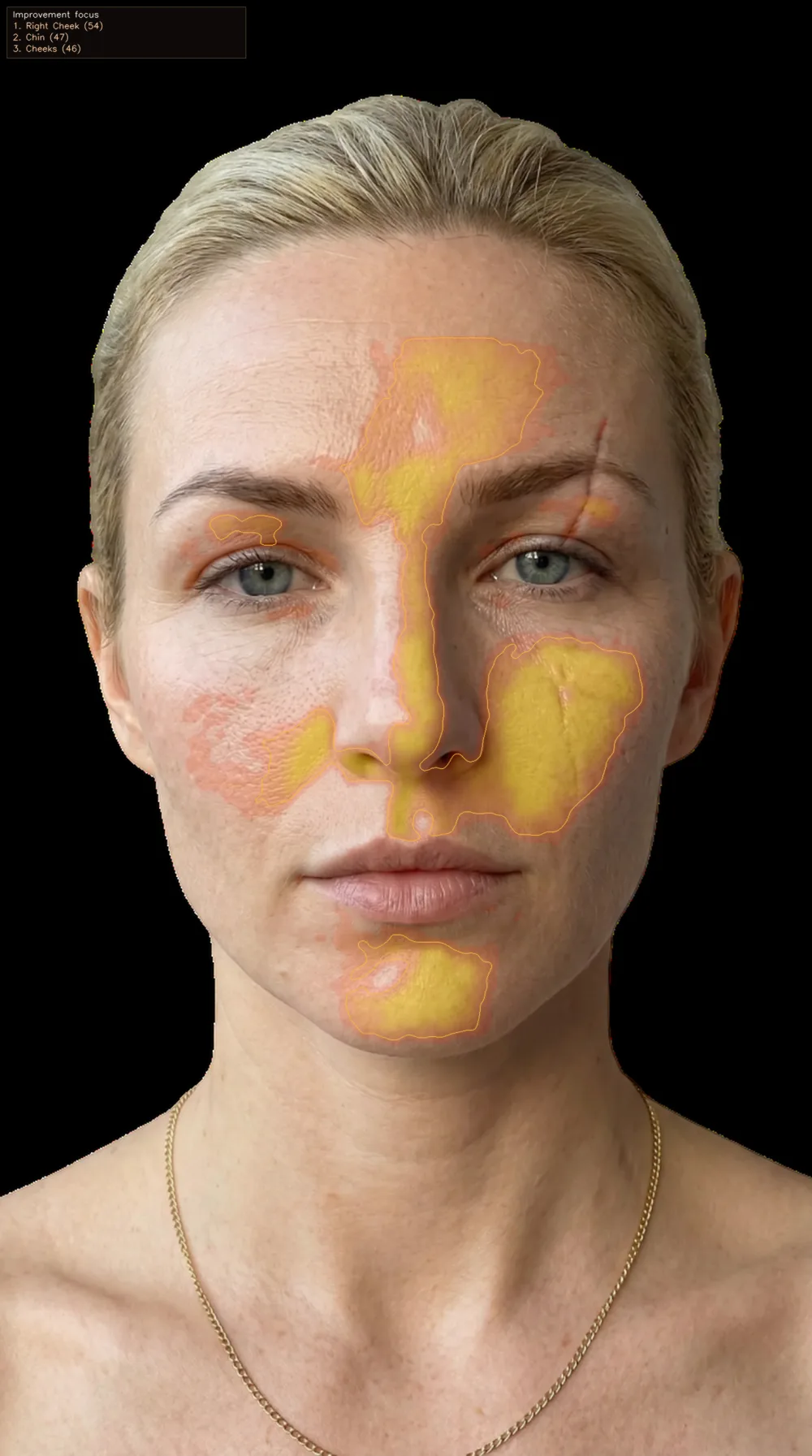
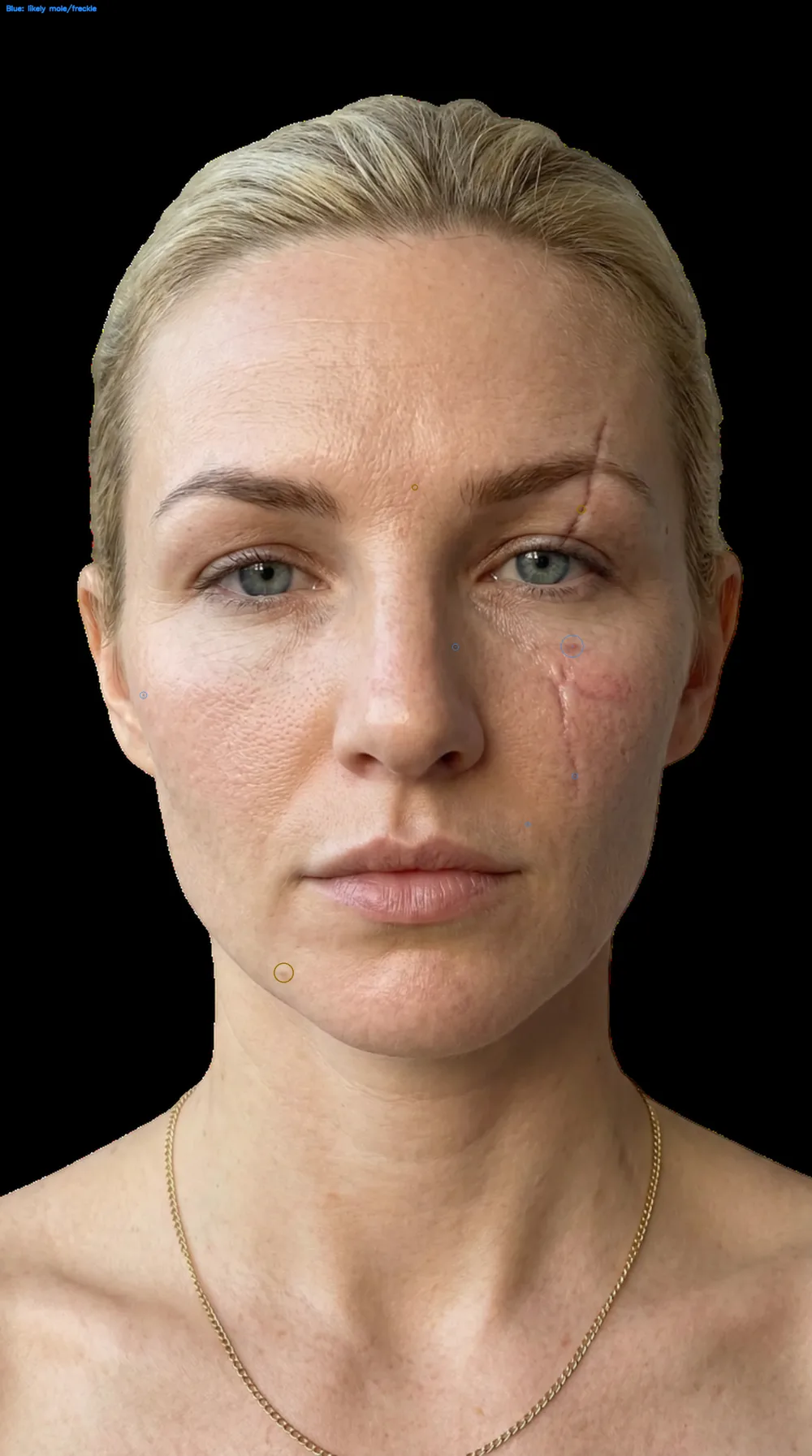
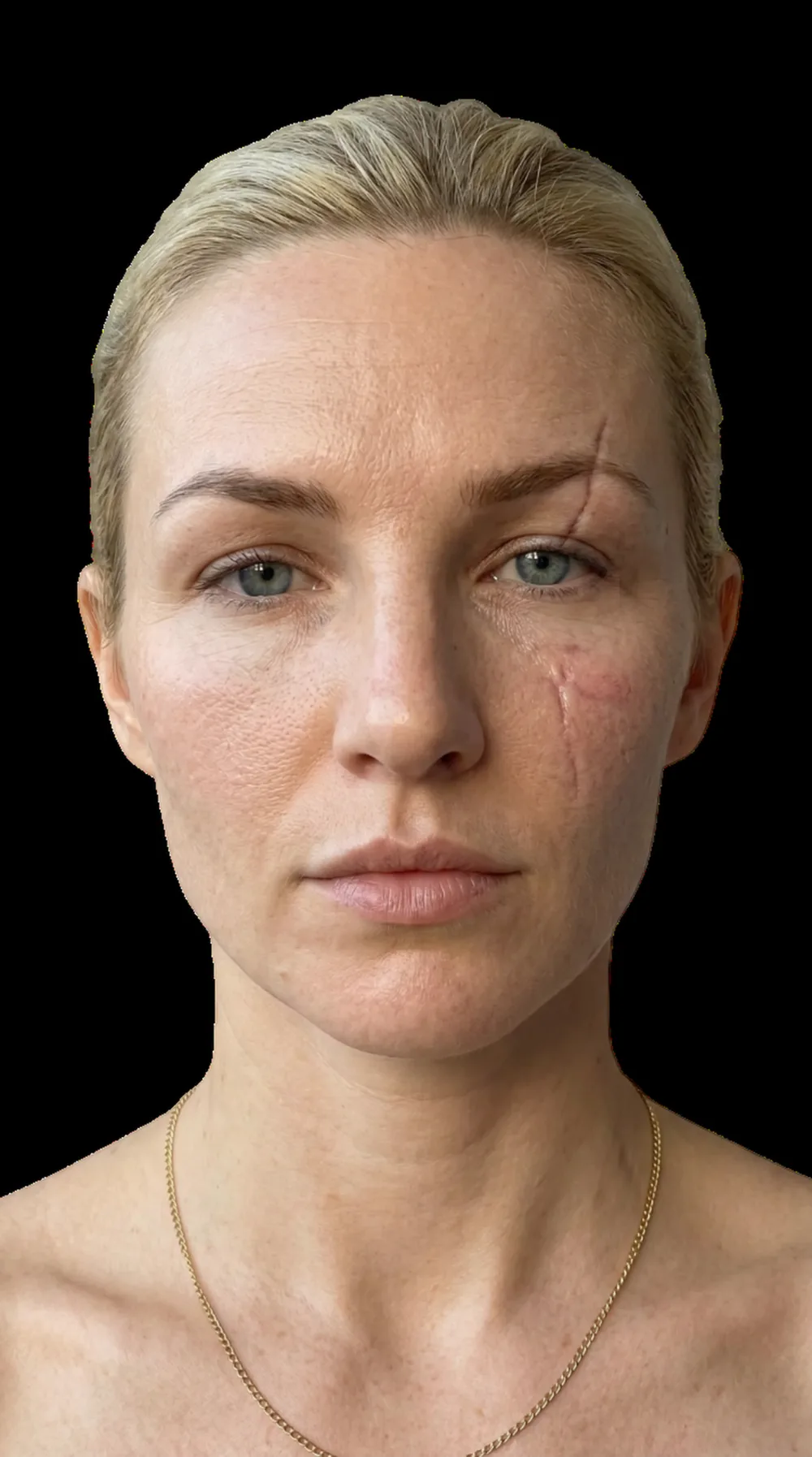
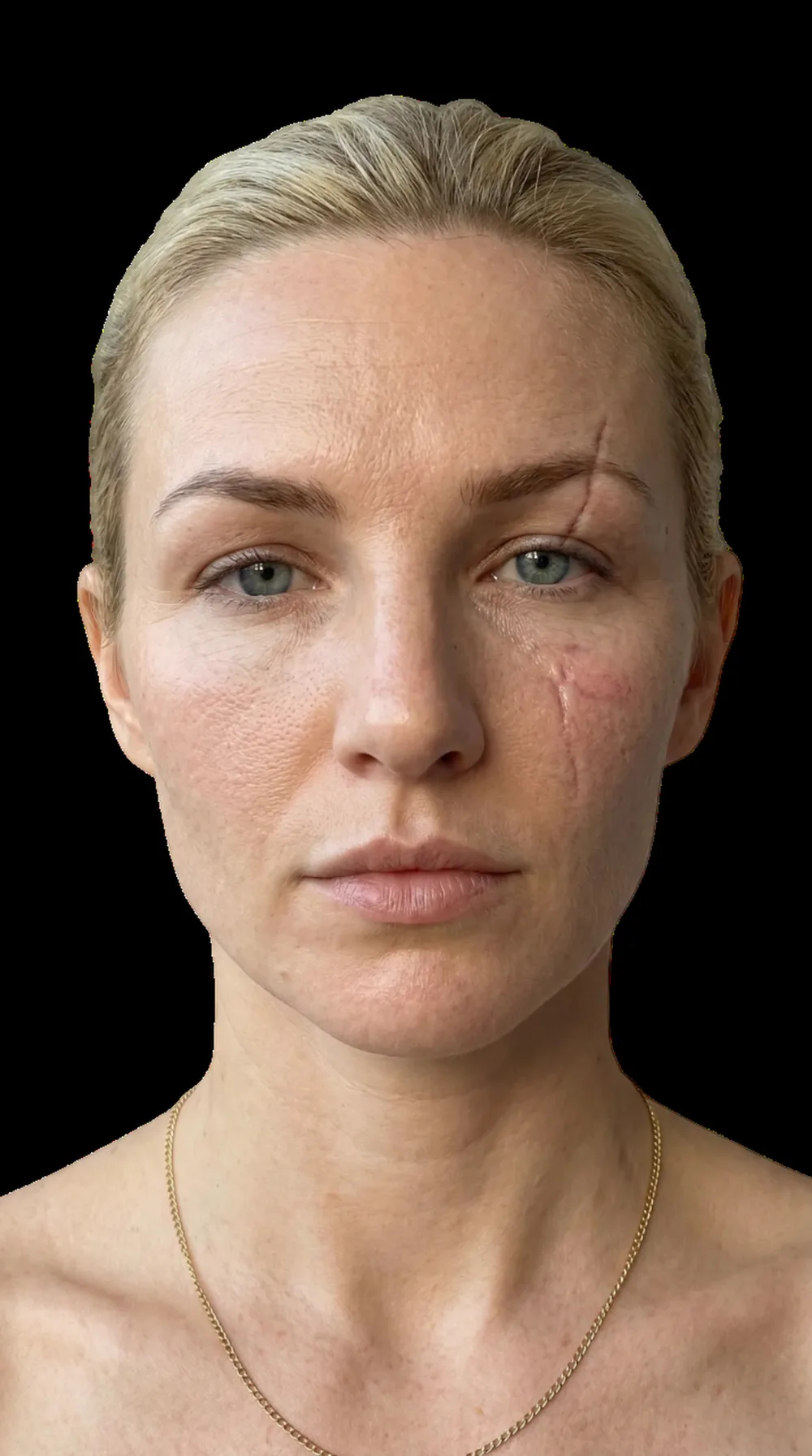
Multi-scale blob detection isolates every visible pore, then renders density as a thermal field. Inner cheeks light up as the dominant zone.
Below are genuine scan outputs: pore, oil, texture, line and tone maps, redness zones, acne, dark-circle and under-eye detection, the stop list for an example routine, followed by the features included in the paid full report.


Multi-scale blob detection isolates every visible pore, then renders density as a thermal field. Inner cheeks light up as the dominant zone.

Specular-shine analysis separates the T-zone from the U-zone. The result: a balanced, normal skin profile with mild forehead shine.

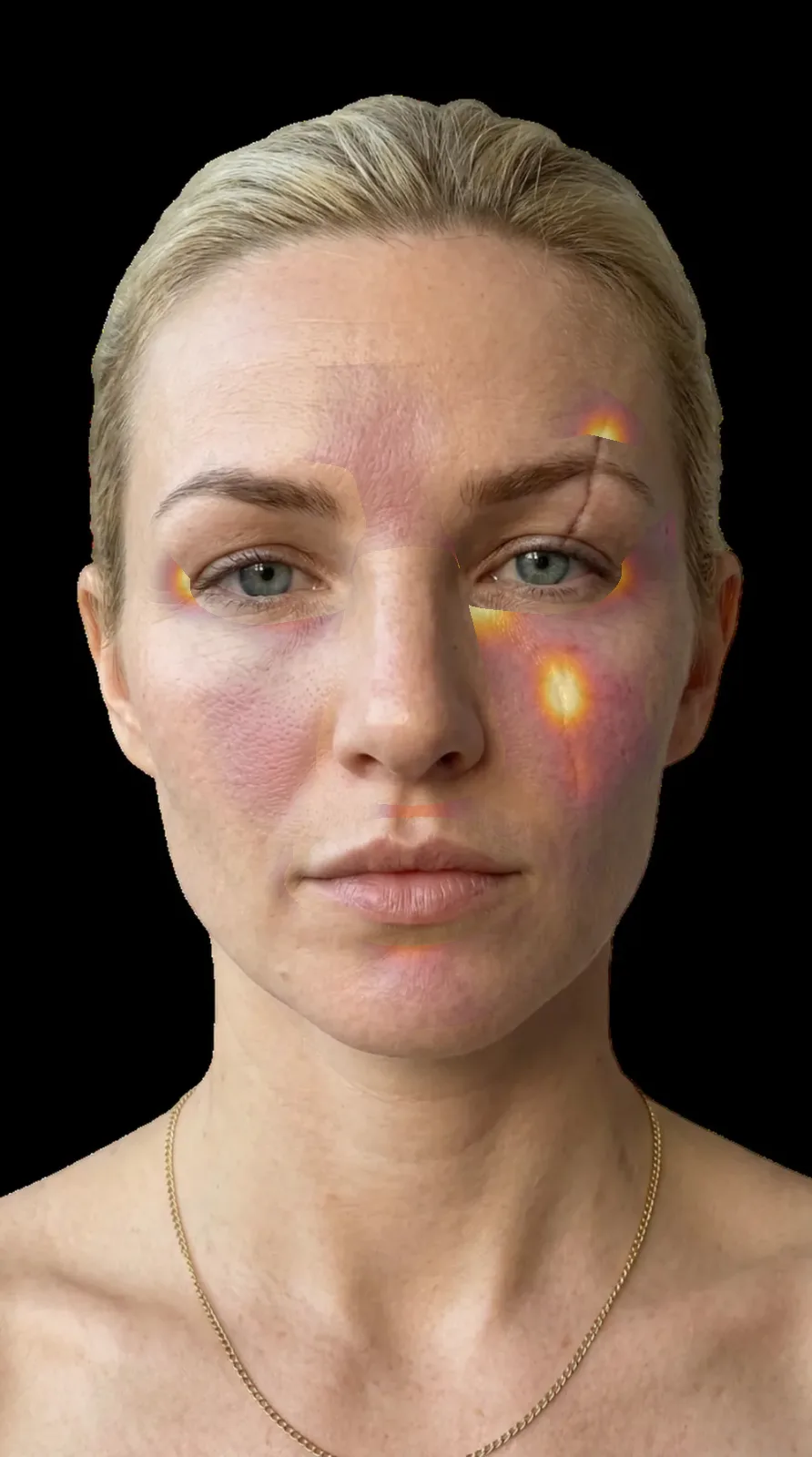
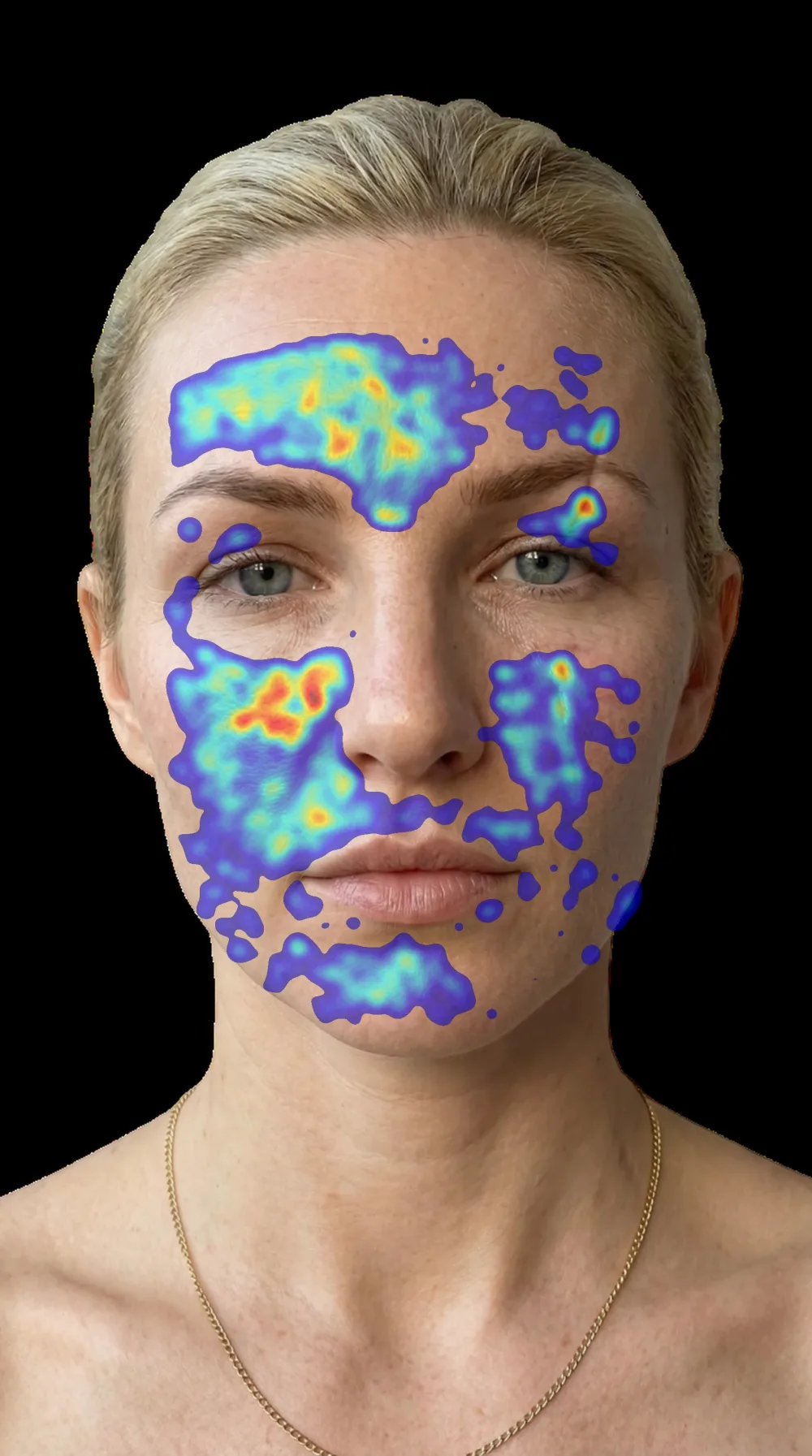
Color and tone signals combine into a single redness map. 17 hotspots detected - the right cheek carries the strongest concentration.

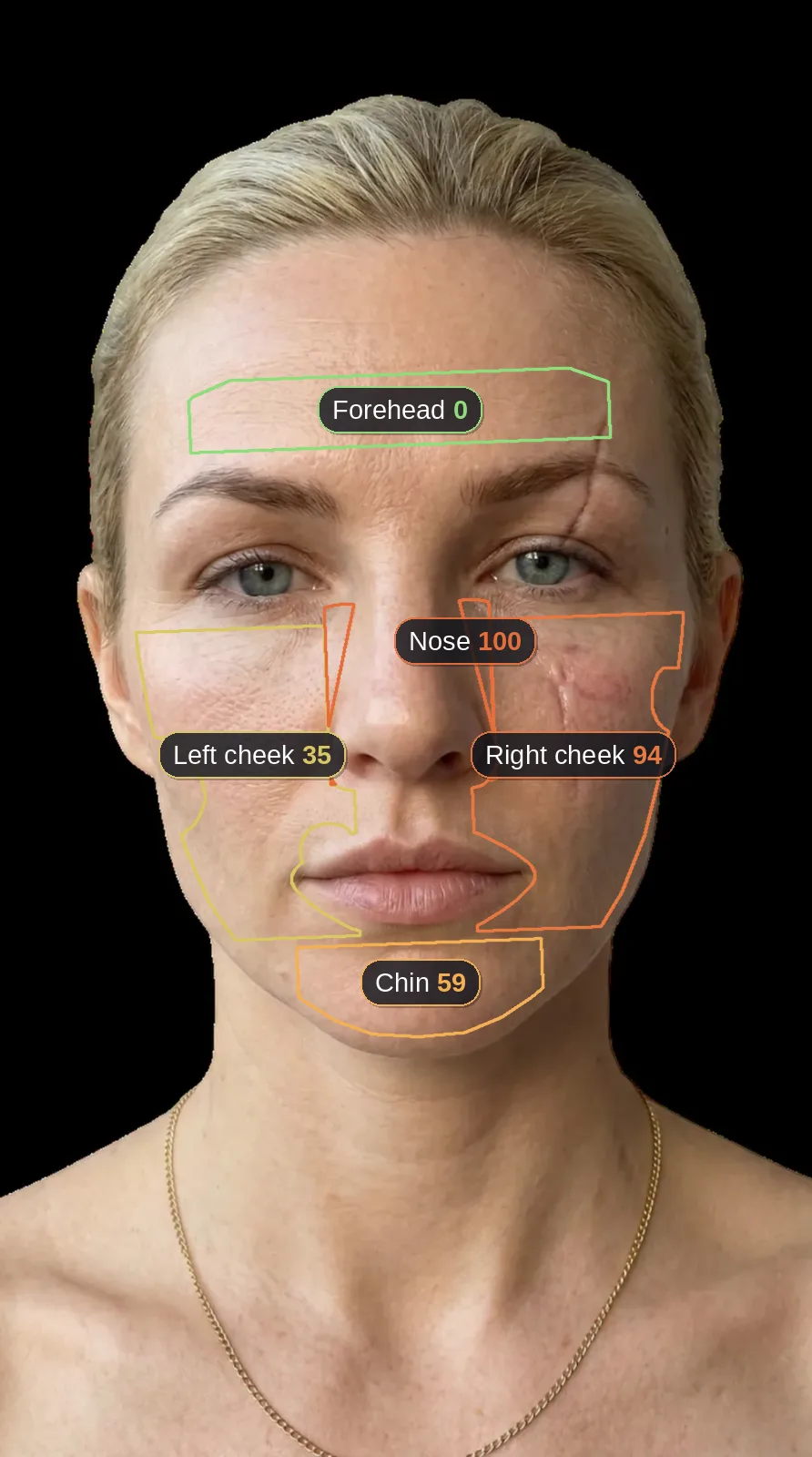
Micro-contrast inside the skin mask after lighting correction, by zone. 17/100 reads smooth; the nose carries the most roughness and the forehead the least. Reading confidence 0.75: good light, slightly uneven from one side.

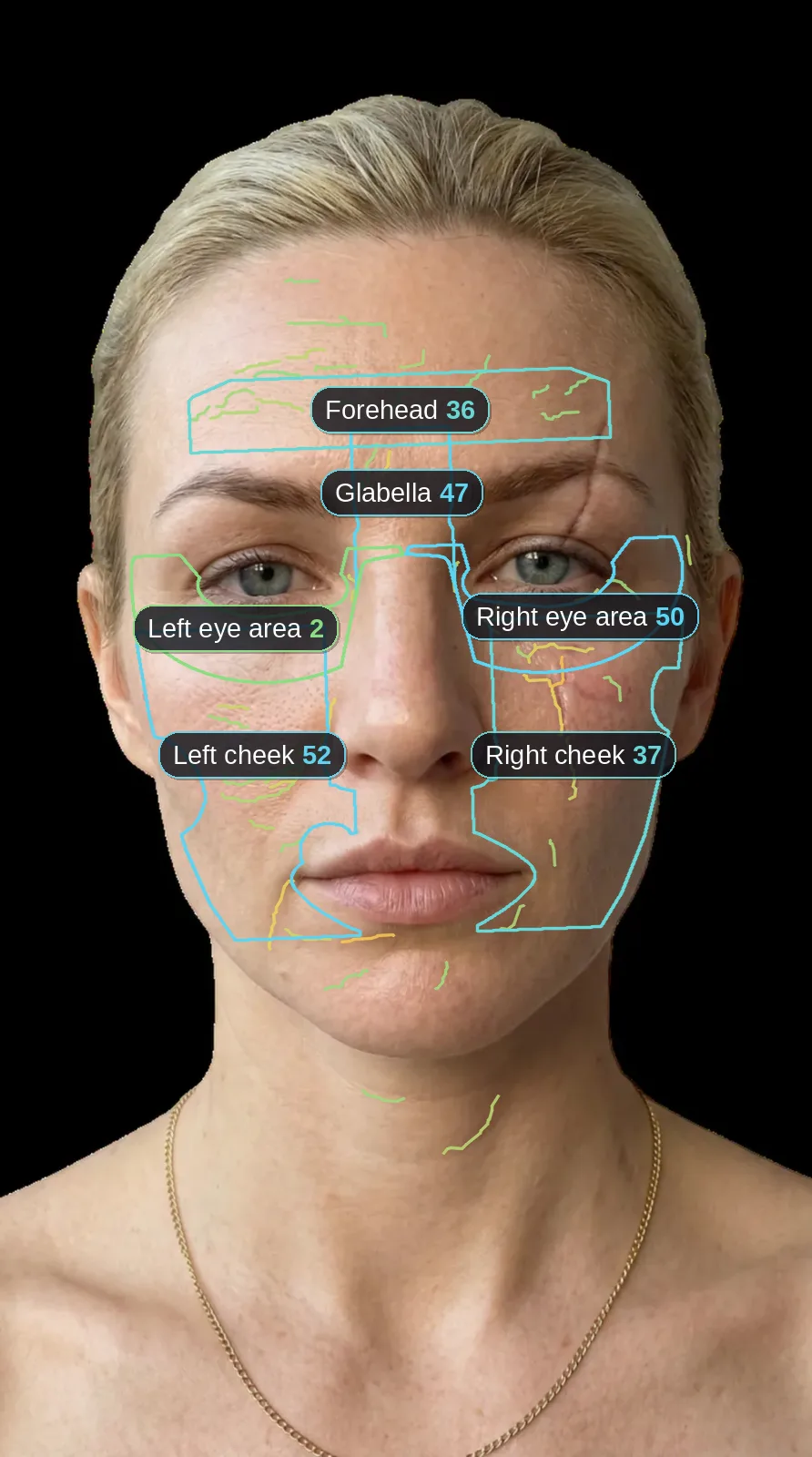
58 traced lines, 11 of them creases, weighted by how clearly each prints. The left cheek and the right eye area lead; the left eye area reads almost clear. Confidence 0.63 and shown with a caveat: light from one side prints lines that flat light would not.

Colour variance against the face's own skin tone, zone by zone, plus a dark-spot search. No discrete spots or patches on this photo; the unevenness sits on the nose and the right cheek. Nothing here flags a professional review.

The model doesn't simply count every visible mark. It separates likely active spots from likely non-acne marks so you can inspect what contributed to the result.

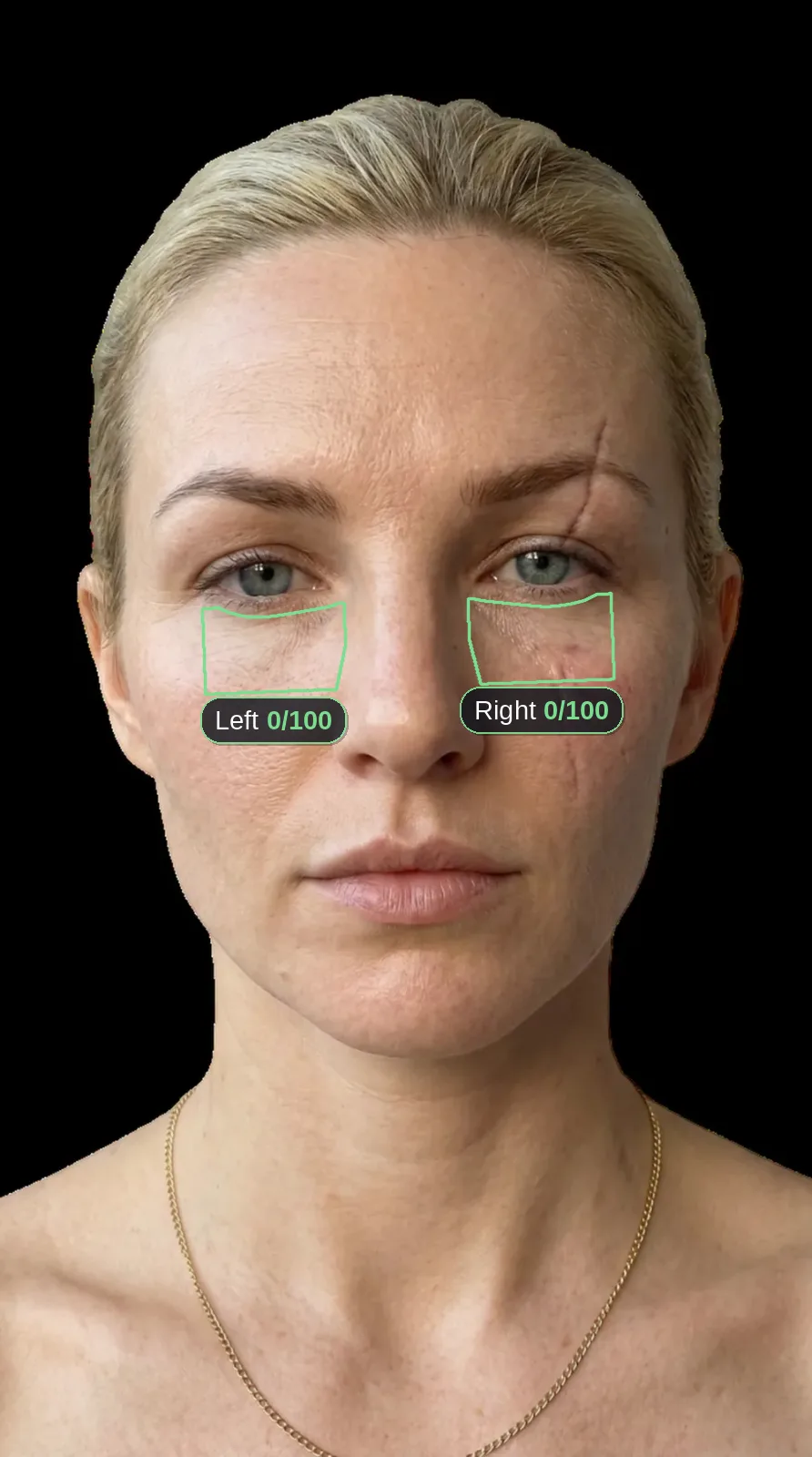
L-channel brightness is compared against a cheek reference per eye. Little to no visible darkness here — and the asymmetry is measured to the point.

The shadow under each eye is read after the colour-based darkness the dark-circles module already reports is removed, and after light from above is discounted. Here nothing is attributable to shape, and the reading says so with a caveat rather than a guess: the photo is lit from the top.
This sample was built from one front photo. With the guided camera, a left and a right photo are read where the cheeks face the lens: each photo gets a quality score and the report lists what it used. Nothing on this page needed them.
Your pore visibility reads lower than about 64% of people aged 25–34 who scanned in good lighting (based on 2,100 scans).
Illustration of the format. A comparison sentence appears in a report only once a comparable group reaches 200 scans; it always names who you are compared with (people who scanned here, never the general population) and is only ever shown for readings where lower is plainly better.
Real engine output for this scan with an example routine of four products: a glycolic toner morning and night, a retinol serum in the morning, a vitamin C + niacinamide serum, and SPF a few times a week.
Retinol serum is a retinoid applied in the morning. Retinoids break down in daylight and make skin more sun-sensitive; move it to the evening and keep sunscreen in the morning.
Martin et al., Br J Dermatol 1998
You do not need to split them: the 'cancel out' claim comes from decades-old lab conditions, not from use on skin.
Bissett et al., Dermatol Surg 2005
Already the highest-value step in your routine. Keep it, and reapply when you are outdoors.
Lakhdar et al., JEADV 2007
Every verdict is a rule with a citation; the plan that follows never recommends an active the list says to stop. It cannot see prescriptions: your clinician comes first.
Upload one selfie. Computer Vision marks the strongest match for your face shape and hairline — the final call stays yours.

The free preview proves the scan is personal. The paid report turns those signals into decisions for your skin and hairstyle over the next 30 days.
Yes. Every map and number on this page comes from a real engine run on a volunteer photo. The free preview shows a selected subset; the complete set is part of the paid report.
The free preview shows your top opportunity, selected proof maps, and a glow-up visualization. The paid report adds every priority in order, six hairstyle previews with an AI recommendation, the complete 30-day routine, and a PDF.
AI writing uses derived metrics rather than your raw photo. Glow-up and hairstyle generation sends the portrait to our image-generation provider. The PDF downloads to your device, and a purchased report is also emailed to you.
Texture, fine lines, pigmentation and under-eye hollowing each carry a confidence reading. Side light, a soft focus, a colour cast or a turned head lower it; below the threshold the map is withheld with the reason instead of a number we cannot stand behind. The under-eye card on this page is an example: the photo is lit from above, so it reads with a caveat.
If you give an age band, the skin maps are ranked by what usually matters most at that age: breakouts and shine first for the youngest band, tone and lines first for the oldest. Nothing is hidden by the order; every map that was read is in the report.
Upload one photo to see your top opportunity, selected proof maps, and glow-up preview. The full report stays optional.
Please see a dermatologist if you can — GlowUp Face is built to work alongside professional care, not to replace it. Some of the active ingredients we suggest are prescription-only in many countries, and only a clinician can prescribe them and supervise how your skin responds. Our recommendations are drawn from dozens of peer-reviewed studies and meta-analyses, but they are general guidance, not a diagnosis of your skin.