
Find What to Improve First — Without a Beauty Score
What should you improve about your face? First rule out lighting, distance and camera processing. GlowUp Face then measures visible, changeable patterns. The free preview gives you a starting point from selected signals; the optional full report separates and ranks skin clarity, pores, redness, shine and under-eye darkness. It never rates your attractiveness.
What the glow-up test shows you
- A free starting point from selected visible signals — not a vanity score
- Full report: acne-like spots, pores, texture, redness and shine by facial zone
- Full report: under-eye brightness differences measured against your own cheeks
- A projected 'after' image so you can see the upside of the work
- One clear starting point instead of forty generic tips
How the test decides what to improve first
This is the real GlowUp Face map format from a volunteer's full report. The free preview uses selected signals; the full report adds the complete map set. These maps describe visible patterns in the frame and are not a diagnosis.
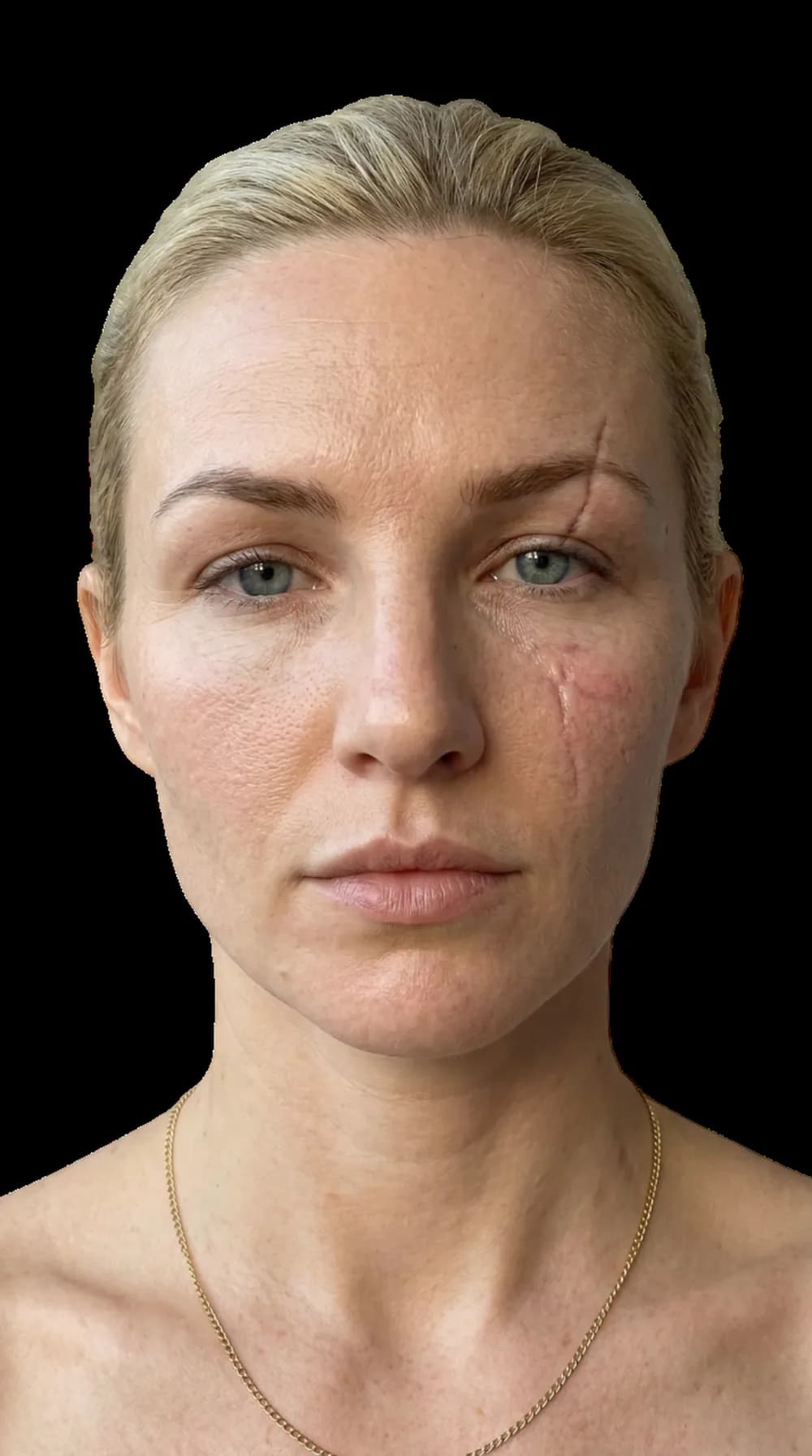
First check that the face is front-on, evenly lit and not altered by a strong filter.
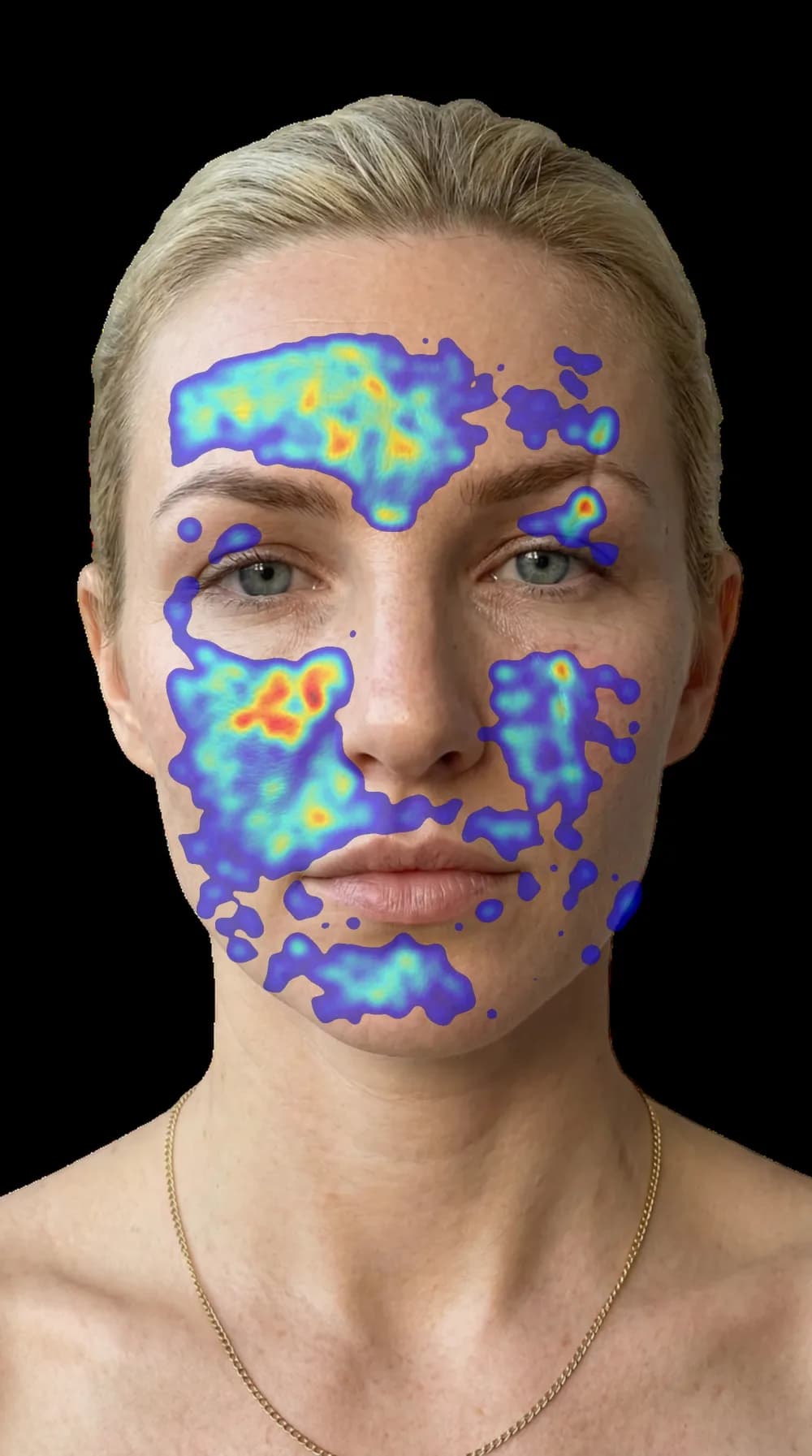
Pores, redness, shine, acne-like spots and under-eyes are analyzed separately.
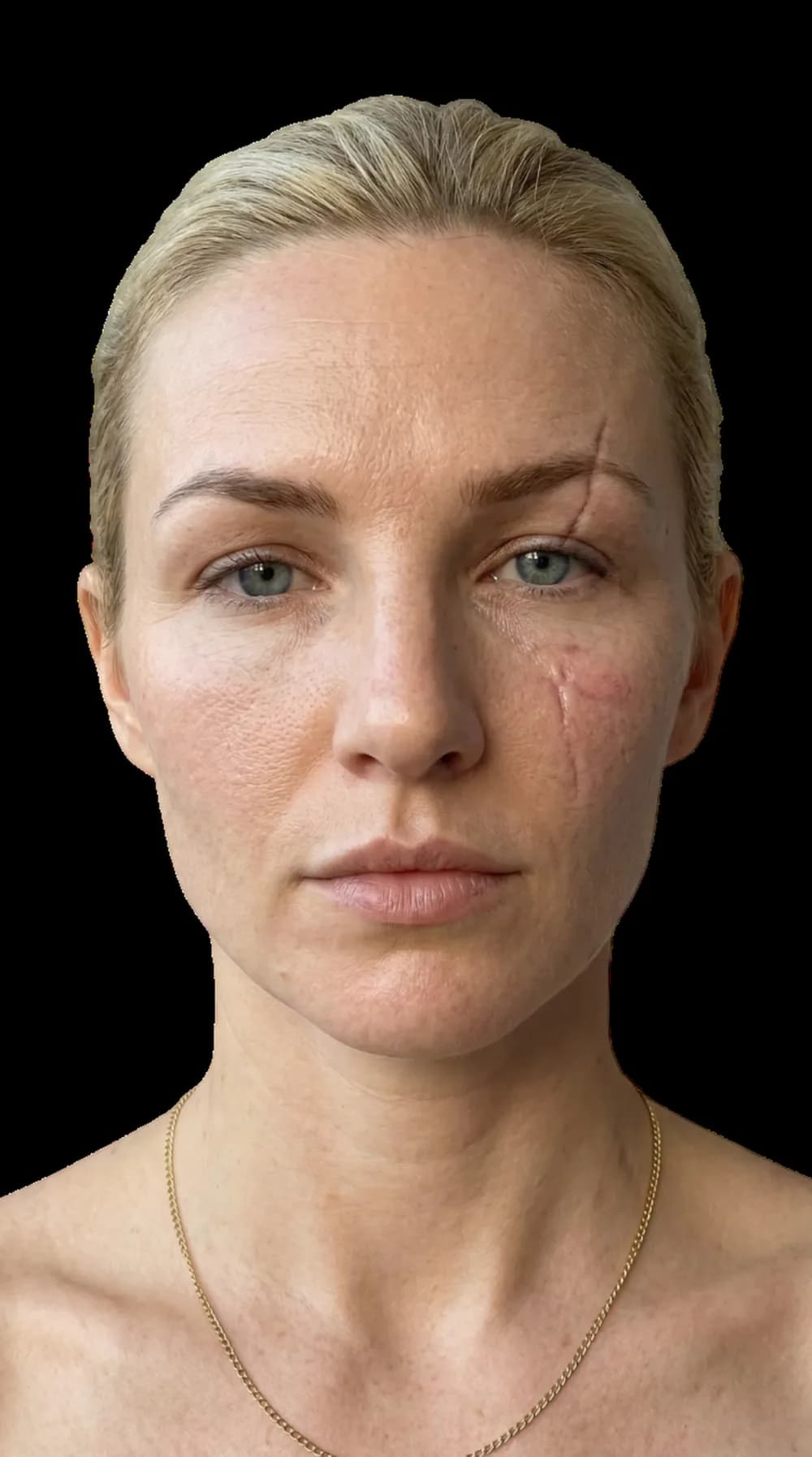
The free preview gives you a starting point from selected signals; the full report ranks the complete set — without a beauty score.
What should I improve about my face first?
Start by separating the photo from your face. Harsh light, a close camera, makeup, phone sharpening and an unfamiliar angle can create a concern that is not stable in other conditions. Retake the photo in soft, even light before deciding anything needs fixing.
Next, separate observable signals from fixed features and personal taste. The complete GlowUp Face analysis measures visible skin and under-eye patterns — acne-like spots, pore visibility, redness, shine and under-eye darkness. It does not decide whether your face shape, nose or other fixed features are good or bad.
Why prioritization beats a beauty score
A score answers the wrong question. A number cannot tell you whether the result came from visible breakouts, uneven tone, under-eye shadows or simply a poor photo. A ranked list can show which measured signal contributed most strongly in that image.
The goal is not to invent flaws. It is to avoid spending time and money on five generic fixes when one observable pattern is more useful to track — or when the honest answer is to retake the photo first.
What one photo can — and cannot — reveal
One clear photo can show where visible spots, pore-like texture, color variation, shine and under-eye brightness differences appear in that frame. Some color-based signals use nearby areas of your own face as a reference instead of one universal skin-color target.
A selfie cannot diagnose acne, rosacea, allergies or the cause of dark circles. It also cannot judge personality, style or attractiveness. Treat the result as a baseline for practical self-tracking, and use a qualified clinician for persistent, painful or concerning skin changes.
From test result to a plan you'll actually follow
The free result shows a starting priority from the selected preview signals. The full glow-up report ranks the complete metric set and turns it into a concrete AM/PM and weekly routine — no subscription, a one-time unlock.
The point is not obsession. It is spending your limited effort on the one or two things that will visibly move first, then checking back in to see progress.
Glow-up test FAQ
Is the glow-up test free?
Yes. One photo gives you a free overall preview based on selected visible signals. The complete metric ranking, care plan and downloadable report are a one-time $14.90 unlock — no subscription.
Is this a face-rating or 'how attractive am I' test?
No. There is no attractiveness score and no ranking of you against other people. It measures changeable signals on your own face and tells you which to work on first.
What does it actually analyze?
The full report analyzes acne-like spots, pores, texture, redness, shine and under-eye brightness differences by facial zone; the free preview uses selected signals. It does not diagnose medical conditions — it is a screening and self-tracking tool.
What photo should I use?
A clear, front-facing photo in natural light with no sunglasses gives the most reliable result. JPEG or PNG.
Is my photo private?
Yes. The scan is built for private self-tracking, not public scoring. See the Face Data Privacy page for details.
Take the free glow-up test
Upload one clear photo for a free overall preview based on selected signals. An email is required to unlock it; no account or card is needed. The optional full report adds the complete ranked analysis.
Show my glow-up potential